Home / Mumbai / Mumbai News / Article /
Railways answer mid-day's five burning questions following Mumbra train tragedy on June 9
Updated On: 11 June, 2025 12:37 PM IST | Mumbai | Rajendra B. Aklekar
Over the last seven years, the Railways have built 96 new foot overbridges and created additional space at nearly every station to ease congestion. In addition, multiple elevators and escalators have been installed, and expansion work on the existing network is underway in various phases


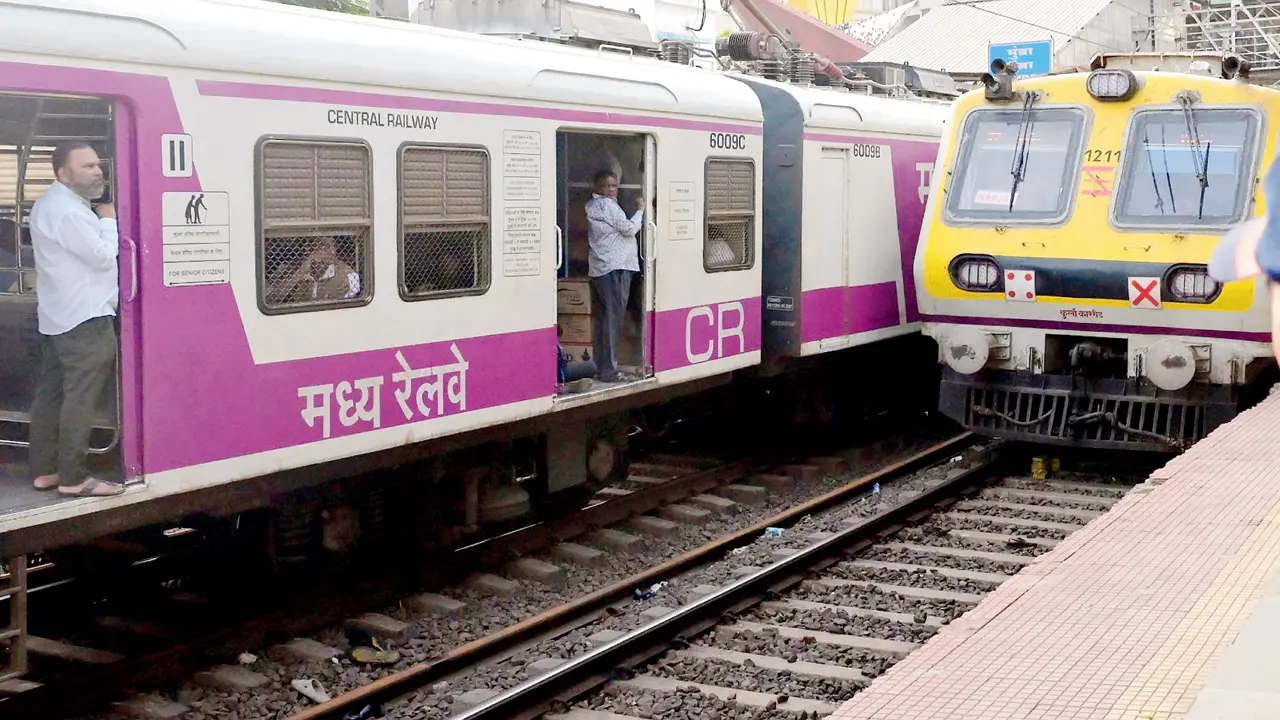
Mumbra station, where the mishap occurred. Pic/Sayyed Sameer Abedi
Following the Mumbra incident on Monday, mid-day had raised five pertinent questions about the functioning of the railways, the rising number of deaths, and overall operations. We spoke with various stakeholders across Central Railway (CR), Western Railway (WR), Mumbai Railway Vikas Corporation (MRVC), and other departments to get answers to five key questions about Mumbai’s railway system.
A frightening statistic on Mumbai's suburban railway network for years is that seven to eight people die every day, some from falling off trains. Why, two-and-a-half decades into the 21st century, do we still not have a foolproof system in place to ensure zero deaths?
There are currently seven deaths per day across both CR and WR. In the past few years, 150 suburban services have been added. However, the number of passengers has still not reached pre-COVID levels (44 lakh in 2018 vs 39.96 lakh today).
Over the last seven years, the Railways have built 96 new foot overbridges and created additional space at nearly every station to ease congestion. In addition, multiple elevators and escalators have been installed, and expansion work on the existing network is underway in various phases. Completion of these projects in the coming years is expected to result in a 100 per cent boost in capacity for the Mumbai suburban system.
Currently, WR operates 1,409 suburban services ferrying 35 lakh passengers, while CR operates 1810 suburban services ferrying 40 lakh passengers — a total of 3204 services catering to 75 lakh daily commuters. The aim is to add at least 250 more services over the next five years, for which projects are already in progress.
We still run the city's local trains on tracks built by the British. Why is there no political will to create a more robust railway system for the city, despite the network ferrying 83 lakh people for 20 hours every single day?
Projects worth Rs 16,240 crore are currently underway to boost the system’s capacity. These will add 301.5 km of additional track to the suburban network. Key projects include the segregation of suburban and outstation corridors, minimising cross-movement of trains, and reducing the headway between trains from the current 180 seconds to 150 seconds using Communication-Based Train Control (CBTC) systems. These improvements will enable the addition of at least 250 new services per day and the development of additional outstation terminals.
Why is commuter safety (overcrowding, people falling off trains) not a larger part of the railway budget?
Expanding capacity, which directly impacts safety, is very much part of the railway budget. This year, the following allocations have been made for Mumbai:
>> MUTP Phase-II: Rs 100 crore
>> MUTP Phase-III: Rs 800 crore
>> MUTP Phase-III-A: Rs 877 crore
This totals Rs 1777 crore to ensure that no major project is stalled due to lack of funds.
Why are vital emergency SOPs, like ambulances and GRP personnel, unavailable at stations during mishaps?
In the Mumbra incident, even though passengers fell between stations, they were transported to hospitals within 27 minutes, according to official logbooks.
While it’s not feasible to open full-fledged medical facilities at stations, all stations are equipped with basic first aid. Additionally, the Railways have MoUs with local hospitals to ensure early treatment of accident victims within the golden hour.
Why do changes to the system after tragic events get stuck in red tape and in the offices of disinterested officials, taking years to see the light of day?
Large-scale infrastructure works — never before attempted — are now progressing, thanks to adequate funding. Earlier delays were often due to budget constraints. Now, the only significant hurdles involve land acquisition and obtaining environmental and forest clearances.
Trending Stories
Latest Photos
Latest Videos
Latest Web Stories
ADVERTISEMENT

Ganeshotsav 2026

ADVERTISEMENT