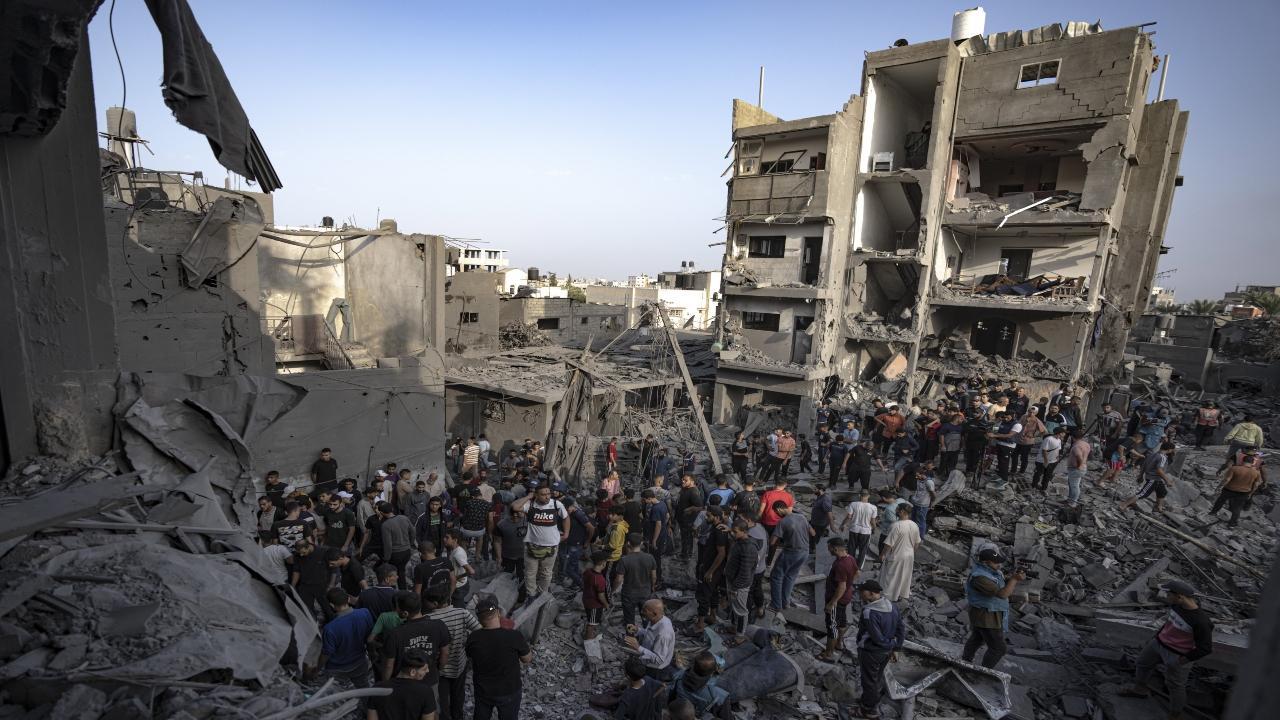
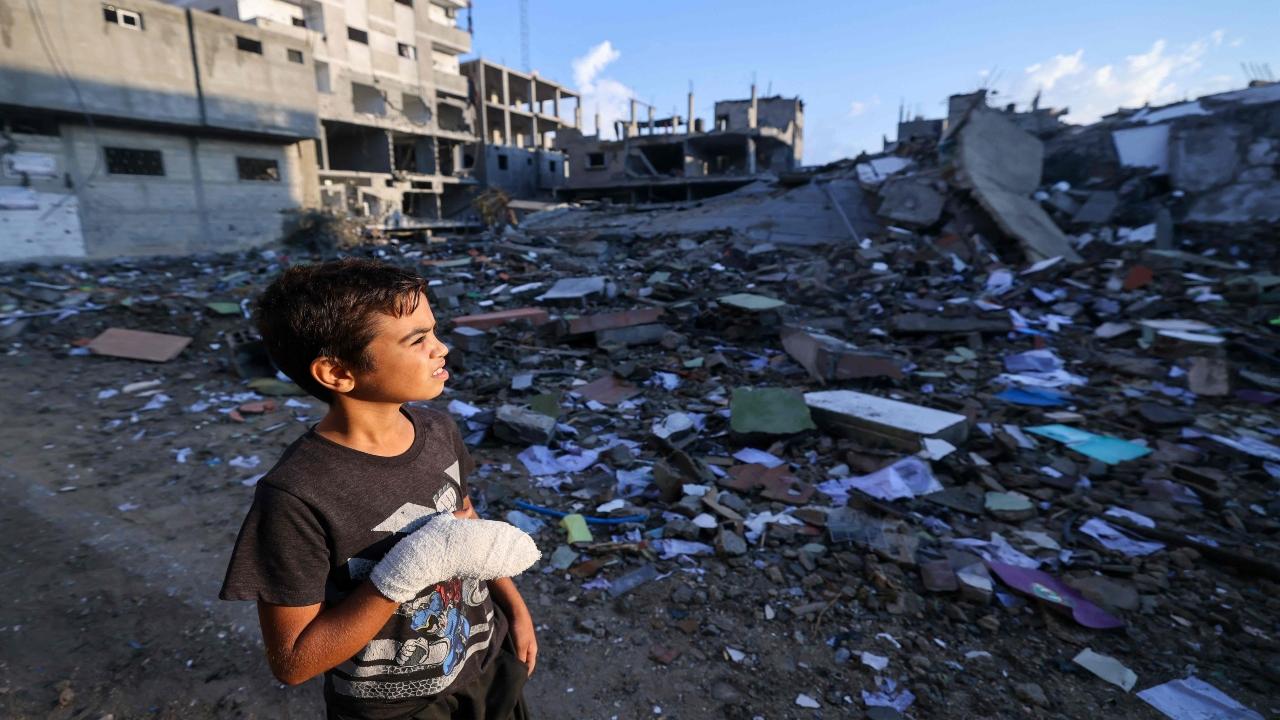
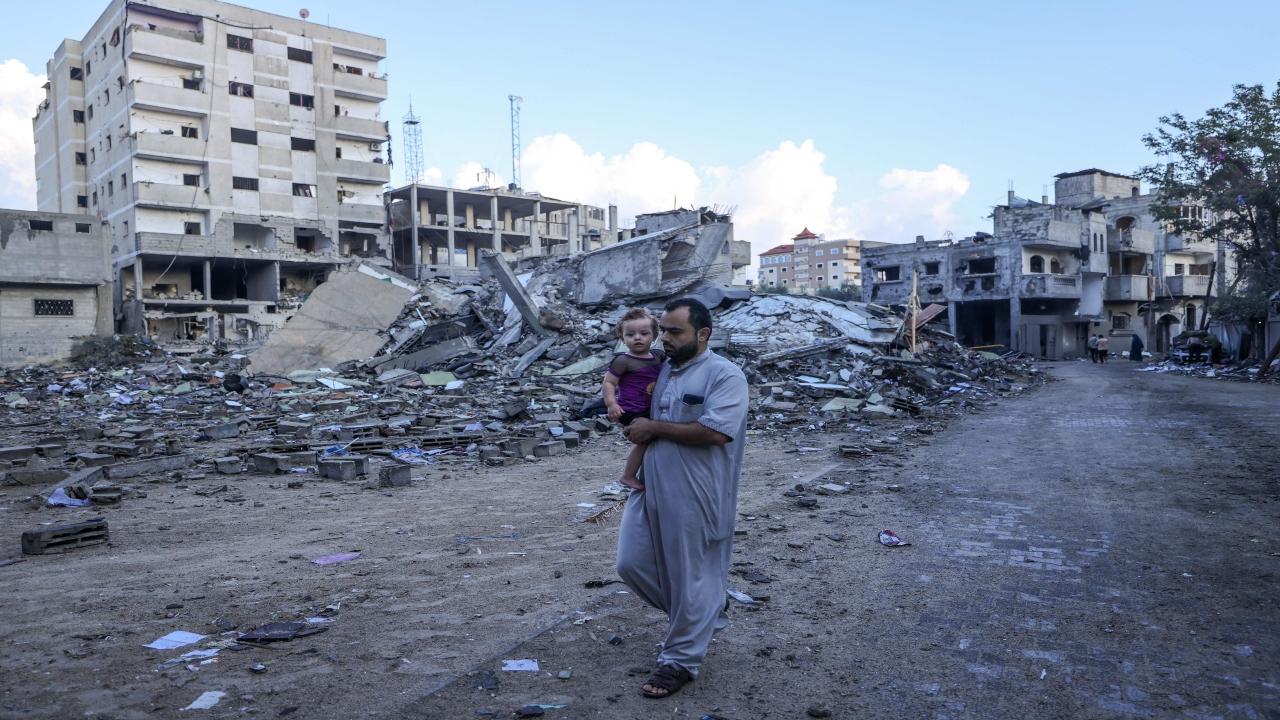
Palestinians look for survivors of the Israeli bombardment of the Gaza Strip in Khan Younis on Tuesday, Nov. 7, 2023. AP/PTI
What was once Gaza's busiest thoroughfare has become a terrifying escape route for Palestinian civilians fleeing combat on foot or on donkey carts. On their way south, those running for their lives said they raised their hands and waved white flags to move past Israeli tanks along the four-lane highway.
Some reported Israeli soldiers firing at them and said they passed bodies strewn alongside the road. Many escaped with just the clothes on their back. One woman, covered head-to-toe in a black veil and robe, cradled a toddler and clutched a black purse. A man walked alongside a covered donkey cart that transported his family. It was piled high with mattresses.
In the north of the Gaza Strip, Israeli ground forces backed by relentless airstrikes have encircled Gaza City, the base of Hamas' power, since the weekend. They cut the strip in half and sought to drive Palestinians from northern Gaza as troops advanced.
From early on in the war, now in its second month, the army has urged civilians to move south, including by announcing brief windows for what it said would be safe passage through Salah al-Din, which runs through the centre of the besieged enclave.
But tens of thousands of civilians have remained in the north, many sheltering in hospitals or United Nations facilities. Those who have stayed put say they are deterred by overcrowding in the south, along with dwindling water and food supplies, and continued Israeli airstrikes in what are supposed to be safe areas. Some said fear of the treacherous journey, following reports from other travellers about coming under fire, initially made them hesitate.
On Monday, Health Ministry in Gaza spokesperson Ashraf al-Qidra dismissed the Israeli offers of safe passage as "nothing but death corridors". He said bodies have lined the road for days, and called for the International Committee of the Red Cross to accompany local ambulances to retrieve the dead.
Israel's military said that, at one point, troops came under Hamas fire when trying to open the road temporarily for civilians. Israel's Prime Minister Benjamin Netanyahu echoed the army's claims in an interview with ABC News broadcast late Monday.
"We are fighting an enemy that is particularly brutal. They are using their civilians as human shields, and while we are asking the Palestinian civilian population to leave the war zone, they are preventing them at gunpoint," Netanyahu said. The claims could not be verified independently.
During a four-hour evacuation window Sunday, fewer than 2,000 made the move, followed by about 5,000 on Monday, according to UN monitors. Some of those were from Gaza City and the adjacent Shati refugee camp, fleeing Monday after heavy Israeli bombardment there overnight.
"Last night was very difficult," said Amal, a young woman who declined to give her family name due to safety concerns. She was part of a group of 17 people making the journey Monday. She said tanks fired near the group. Soldiers then ordered everyone to raise their hands and white flags before being allowed to pass. Nour Naji Abu Nasser, 27, arrived Sunday in Khan Younis in southern Gaza. She described an hourslong frightening journey.

ADVERTISEMENT