
The upcoming Budget is going to put emphasis on easing the debt-to-GDP ratio, which is around 56 per cent, instead of targetting a specific fiscal deficit number as the country has almost reached the end of the glide path envisaged in the FRBM legislation. A fiscal deficit of 3-4 per cent is considered comfortable and a desirable target for a growing, developing economy like India, aiming to balance economic expansion with financial stability. Under the revised Fiscal Responsibility and Budget Management (FRBM) Act, the fiscal deficit target was below 4.5 per cent of GDP for 2025-26. Therefore, the union government announced a new glide path with the debt-to-GDP ratio as the fiscal anchor. So, the roadmap for the next six years was announced in the FRBM statement released on February 1, 2025. Finance Minister Nirmala Sitharaman, in her Budget speech in July 2024, had said, "The fiscal consolidation path announced by me in 2021 has served our economy very well, and we aim to reach a deficit below 4.5 per cent next year. The government is committed to staying the course."From 2026-27 onwards, she had said, "Our endeavour will be to keep the fiscal deficit each year such that the central government debt will be on a declining path as a percentage of GDP." It encourages a shift from rigid annual fiscal targets towards more transparent and operationally flexible fiscal standards. It is also recognized as a more reliable measure of fiscal performance as it captures the cumulative effects of past and current fiscal decisions. It is expected that the debt-to-GDP-based fiscal consolidation strategy would help rebuild buffers and provide the requisite space for growth-enhancing expenditures. The FRBM statement dated February 1, 2025, said the choice of fiscal anchor aligns well with the government's sustained efforts to promote fiscal transparency through proper disclosure of off-budget borrowings. For the period FY 2026-27 to FY 2030-31, it is possible to compute several fiscal scenarios based on GDP growth trends and varying degrees of fiscal calibrations, it said. "Sans any major macro-economic disruptive exogenous shock(s), and while keeping in mind potential growth trends and emergent development needs, the government would endeavour to keep fiscal deficit in each year (from FY 2026-27 till FY 2030-31) such that the central government debt is on declining path to attain a debt-to-GDP level of about 50 per cent by March 31, 2031 (the last year of the 16th Finance Commission cycle)," it added. This story has been sourced from a third party syndicated feed, agencies. Mid-day accepts no responsibility or liability for its dependability, trustworthiness, reliability and data of the text. Mid-day management/mid-day.com reserves the sole right to alter, delete or remove (without notice) the content in its absolute discretion for any reason whatsoever.
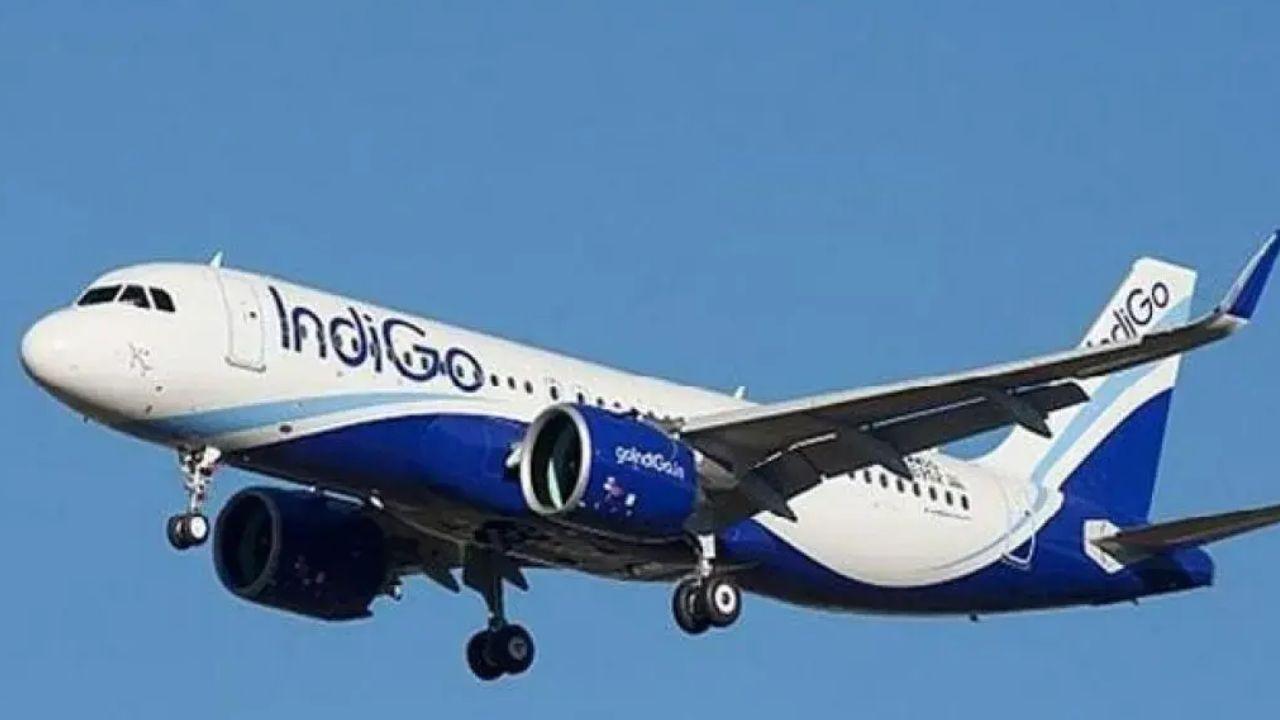
30 January,2026 10:55 PM IST | New Delhi | PTIAn IndiGo Airlines flight from Kuwait to Delhi made an emergency landing in Ahmedabad on Friday after a bomb threat. The emergency landing in Ahmedabad triggered heightened security measures at the Sardar Vallabhbhai Patel International Airport, officials said. As reported by news agency IANS, the aircraft, carrying 186 people, including 180 passengers, was in the air when a handwritten threat was discovered on a tissue paper. The note found inside the aircraft referred to a hijacking and a bomb, prompting immediate action by the flight crew. Soon after the incident, the authorities followed standard aviation safety protocol. Pilot diverted the aircraft to the nearest airport The pilot alerted Air Traffic Control and decided to divert the aircraft to the nearest suitable airport, Ahmedabad. However, the flight landed safely at the Ahmedabad airport, where security agencies were placed on alert ahead of its arrival. Following the safe landing at Ahmedabad airport, all passengers were evacuated from the aircraft in a controlled manner and moved to a secure area of the airport. Also, there were no reports of injuries or medical emergencies during the process. Airport Police Station Inspector N. D. Nakum, while briefing about the incident, stated, “Security agencies responded swiftly after the threat was reported. After the threat was received, all security agencies concerned were alerted. The Bomb Disposal Squad carried out a thorough check of the aircraft.” The official further added, “No suspicious or objectionable item has been found so far. The checking process of the aircraft has been completed, and further investigation is continuing as per protocol," as per IANS. Bomb squad and CISF teams conducted a detailed anti-sabotage check The Bomb Disposal Squad, CISF teams, dog squads, and airport security teams conducted a detailed anti-sabotage check of the aircraft.Following the protocol, all passenger baggage was screened, and passengers were subjected to individual security checks in accordance with standard operating procedures, as per IANS. A strong police presence was maintained across the airport during the operation. Airport sources said flight operations continued with minor, temporary adjustments while security checks were underway. There was no immediate confirmation on when the diverted aircraft would resume its onward journey to Delhi. Also, the authorities are examining the origin and nature of the handwritten threat note and are working to establish how it was placed inside the aircraft. Officials also added that appropriate action would be taken based on the findings of the investigation. The incident comes amid a series of recent bomb threats reported in Ahmedabad. Over the past few days, the city’s airport, courts, and several schools have received threat messages, all of which were later found to be non-specific or hoaxes after extensive checks. (With inputs from IANS)
30 January,2026 06:20 PM IST | Ahmedabad | mid-day online correspondentA 60-year-old farmer killed a leopard with a sickle and a spear to save himself and his son after the wild animal attacked them in Gujarat’s Gir Somnath district, officials said on Thursday. While the farmer, Babu Vaja, and his son were hospitalised following the attack, forest officials have registered a case against the man for killing the big cat. The deadly encounter took place on Wednesday night when Vaja was resting on the verandah of his house situated on the outskirts of Gangda village, nearly 100 km from Veraval, the district headquarters. A leopard emerged from the nearby fields and jumped on Vaja without any provocation, said Range Forest Officer L B BharwadAccording to Vaja, the big cat grabbed his arm and started pulling him. "Upon hearing my cries, my son Shardul rushed to save me. However, the leopard pounced on him and injured him. When I tried to save Shardul, the leopard jumped on me again. During those few minutes, it attacked us several times," Vaja told reporters at a hospital in Una town.The two have suffered injuries to the forearms and forehead, said officials. The senior citizen said he grabbed a sickle and a spear kept in the verandah and managed to kill the wild animal.After learning about the incident, Bharwad and his team reached the spot and sent the carcass for post-mortem. We have also recovered weapons used by Vaja to kill the animal. We have registered a case against Vaja for killing the leopard and launched a probe," said Bharwad. This story has been sourced from a third party syndicated feed, agencies. Mid-day accepts no responsibility or liability for its dependability, trustworthiness, reliability and data of the text. Mid-day management/mid-day.com reserves the sole right to alter, delete or remove (without notice) the content in its absolute discretion for any reason whatsoever.
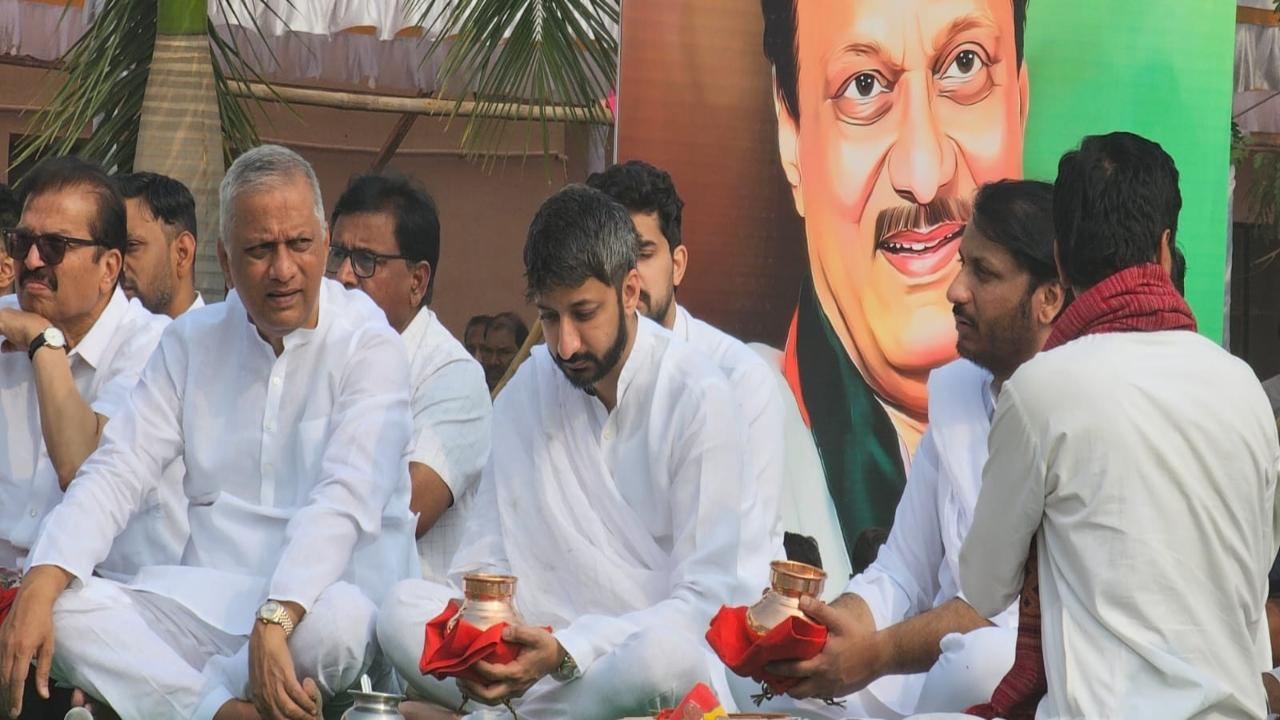
30 January,2026 04:49 PM IST | Veraval (Gujarat) | PTIA day after Maharashtra Deputy Chief Minister Ajit Pawar was cremated in his hometown Baramati in Pune district following his death in a plane crash, his two sons on Friday collected his ashes from the funeral site, news agency PTI reported. Pawar (66), fondly known as ‘Dada (elder brother),’ and four others were killed when the plane carrying them crashed barely 200 metres from the edge of the tabletop airstrip at Baramati on Wednesday morning. He was cremated with full state honours on Thursday at the Vidya Pratishthan College ground in Baramati, located around 100 km from Pune city, in the presence of prominent political leaders and thousands of people. On Friday, Pawar’s sons Parth and Jay collected the ashes from the cremation ground. The late leader’s uncle and Nationalist Congress Party (SP) chief Sharad Pawar, along with other members of the family, were present during the ritual, PTI reported. In Hinduism, ashes are traditionally collected the day after the cremation and later immersed in a river. Rohit Pawar, NCP (SP) legislator and Ajit Pawar’s nephew, shared an emotional post following the leader’s death. “I never even dreamt that the very land where Ajit Dada nurtured a garden of development would one day witness the collection of his ashes. Nobody’s wish prevails before the cruelty of destiny,” he said. “While collecting the ashes today, it felt as if you might suddenly rise from them like a phoenix, standing tall with the same commanding presence, and say to us in your familiar voice — ‘Hey fools, why are you shedding tears? I was just pulling your leg. I was conducting a mock drill to see how prepared you are to face a crisis. Now get up, get back to work. We have so much to do for Maharashtra, for the common man here. Come on, don’t be late...’,” the post added. मा. अजितदादांनी जिथं विकासरुपी फुलांची बाग फुलवली तिथंच त्यांची राख सावडण्याची वेळ येईल, असं कधी स्वप्नातही आलं नाही.. पण नियतीच्या क्रूर खेळापुढं कुणाचं काही चालत नाही.. अजितदादांची ती दुर्दैवी बातमी आल्यापासून अद्यापपर्यंत डोकं सुन्न आहे… मन बर्फाप्रमाणे थिजलंय.. काय झालं, कसं… pic.twitter.com/vxD2KKfybi — Rohit Pawar (@RRPSpeaks) January 30, 2026 Ajit Pawar death: Late NCP chief wanted both factions to reunite, says family aide Kiran Gujar, a member of Vidya Prathisthan and a close associate of Maharashtra Deputy Chief Minister Ajit Pawar’s family, on Friday said that the unification of the two factions of the NCP was the late party chief’s last wish. Addressing reporters after the ceremony, Gujar said, “Today, the ashes of Ajit Pawar were immersed at Sangam here. It was ‘Dada’s’ last wish that this (merger of two factions of NCP) should happen. All should be united. Talks about this were happening throughout the family. In my last phone call with them, he had asked me for some election-related papers.” Earlier, NCP and NCP (Sharadchandra Pawar) had contested the Pune and Pimpri-Chinchwad Municipal Corporation elections together, and discussions were underway for a possible alliance in the forthcoming zilla parishad and panchayat samiti elections. Against this backdrop, there was speculation that the two factions might reunite under a single symbol before Pawar’s passing. His death has once again fuelled political speculation in Maharashtra. Reacting to this, Shiv Sena leader Shaina NC appealed to people not to indulge in conjecture, stating that the decision regarding the new NCP chief and the post of Maharashtra Deputy Chief Minister rests with the party. (With PTI and ANI inputs)
30 January,2026 04:45 PM IST | Pune | mid-day online correspondentUnion Home Minister Amit Shah on Friday said that the EU-India free trade agreement will ensure that Assam tea shipments will reach the European countries with zero tariff. Addressing a public rally at the Khanikar Parade Ground here, Shah said Prime Minister Narendra Modi has taken Assam tea to Paris and Berlin along with other countries of the European bloc through the recently signed trade pact. ''The EU-India trade pact will further boost Assam tea exports to European countries'', he asserted. India and the European Union on Tuesday sealed a landmark free trade agreement - billed as the "mother of all deals" - to create a market of two billion people, with Prime Minister Narendra Modi and the top EU leadership unveiling a transformative agenda to leverage trade and defence in protecting the rules-based world order.In a bid to woo the tea tribe community ahead of the upcoming assembly elections, the union minister thanked the tea garden workers for giving a "distinct identity to Assam and India as one of the leading exporters of tea to the world". ''Dibrugarh is known as the tea capital, and garden workers have ensured that the aroma of Assam tea reaches the world. The state is recognised in the world for its tea. It is the hard work of labourers that has ensured this," he said. Asserting that tea garden workers have strengthened the state's economy, Shah said they also ensured that the beverage remains a leading export commodity. The BJP leader alleged that the Congress did "nothing for the welfare of garden workers who have positioned Assam, particularly Dibrugarh, as the tea capital of the country". ''The chief minister has amended the law to ensure that the tea garden workers get ownership rights of land," he said.Shah accused the Congress of giving a toolkit to defame Assam and its tea. Tea garden workers constitute a sizeable electorate in the upper Assam assembly constituencies, which was earlier considered a Congress stronghold, but they have slowly shifted their allegiance to the BJP since 2014. This story has been sourced from a third party syndicated feed, agencies. Mid-day accepts no responsibility or liability for its dependability, trustworthiness, reliability and data of the text. Mid-day management/mid-day.com reserves the sole right to alter, delete or remove (without notice) the content in its absolute discretion for any reason whatsoever.
30 January,2026 04:44 PM IST | Dibrugarh | PTIA youth was allegedly publicly assaulted near Mumbai by people claiming to be the supporters of the Bharatiya Janata Party (BJP), Maharashtra Navnirman Sena (MNS), and Shiv Sena (UBT), according to a video that has gone viral on social media. Earlier, the youth had posted a video online in which he used abusive language against MNS chief Raj Thackeray and Shiv Sena (UBT) chief Uddhav Thackeray and hurled multiple slurs at the leaders. After the video gained significant traction online, the youth were allegedly attacked in public by MNS and Shiv Sena (UBT) supporters. The man was also reportedly forced to record an apology video, which was later shared on social media. Watch | Youth attacked after offensive video gains traction online View this post on Instagram A post shared by Siddharth sane_2612 (@siddharth_sane.mns) In the apology video, the youth said, “Despite being a Marathi youth, I used offensive language against the leaders. I apologise to Raj Thackeray and Uddhav Thackeray, and also to their supporters, for speaking ill about Maharashtra’s leaders.” South Mumbai: Nagpada brawl leaves several injured, one critical A viral video circulating on social media captured a violent clash between two groups in South Mumbai’s Nagpada area late Thursday night, leaving several people injured and triggering a heavy police deployment. Authorities said one person remains in critical condition, once again highlighting security concerns in the densely populated locality. "A fight broke out between two groups in the Nagpada area of Mumbai last night. Five to six people were seriously injured in the incident, and one person is reported to be in critical condition. The Police have so far detained thirteen people in connection with the incident and are questioning them further. The Mumbai Police have registered a case under relevant Sections of Bharatiya Nyaya Sanhita (BNS) and are conducting further investigations," Mumbai Police told ANI. Mumbai Police says, "A fight broke out between two groups in the Nagpada area of Mumbai last night. Five to six people were seriously injured in the incident, and one person is reported to be in critical condition. The Police have so far detained 13 people in connection with… — ANI (@ANI) January 30, 2026
30 January,2026 04:38 PM IST | | mid-day online correspondentThe Enforcement Directorate (ED) has provisionally attached assets worth Rs 1,885 crore of Anil Ambani's Reliance Group, including immovable properties, bank balances, receivables and shareholding in unquoted investments, according to a statement issued by the agency on Wednesday. The attachments have been done in the Reliance Home Finance Ltd (RFHL), the Reliance Commercial Finance Ltd (RCFL), and the Yes Bank fraud case, as well as the Reliance Communication Ltd (RCOM) bank fraud case, the statement said. The attached assets are in the form of shareholding of Reliance Infrastructure Ltd in BSES Yamuna Power Ltd, BSES Rajdhani Power Ltd, and Mumbai Metro One Private Ltd, it said. Further, a bank balance of Rs 148 crore and receivables worth 143 crore have been provisionally attached in the hands of M/s Value Corp Finance and Securities Ltd. Besides, a residential house in the name of Angarai Sethuraman, and shares/mutual funds in the name of Puneet Garg, both senior employees of Reliance Group, have been provisionally attached, it added. The ED had earlier attached properties worth over Rs 10,117 crore in the bank fraud cases of RCOM, RCFL, and RHFL. The cumulative group attachment has now reached Rs 12,000 crore (approximately). It has detected fraudulent diversion of public money by various Anil Ambani Reliance Group companies, including RCOM, RHFL, RCFL, Reliance Infrastructure Ltd (RIL) & Reliance Power Ltd. During 2017–2019, Yes Bank invested Rs 2,965 crore in RHFL instruments and Rs 2,045 crore in RCFL instruments. By December 2019, these became non-performing investments. The outstanding amount was Rs 1,353.50 crore for RHFL and Rs 1,984 crore for RCFL. The ED’s investigation in the case of RHFL and RCFL reveals that both received public funds of more than Rs 11,000 crore. Before Yes Bank invested this money in the Anil Ambani group companies, Yes Bank had received huge funds from the erstwhile Reliance Nippon Mutual Fund. As per SEBI regulations, Reliance Nippon Mutual Fund could not invest or divert funds directly in Anil Ambani group finance companies due to conflict-of-interest rules. Therefore, public money in mutual fund schemes was routed indirectly by them. The path ran through Yes Bank’s exposures. The public funds reached Anil Ambani group companies through a circuitous route. The ED has also initiated an investigation on the basis of an FIR registered by the Central Bureau of Investigation under various sections of the Indian Penal Code, 1860 and the Prevention of Corruption Act, 1989, against RCOM, Anil Ambani and others. RCOM and its group companies availed loans from domestic and foreign lenders from the period of 2010-2012 onwards, of which a total amount of Rs 40,185 crore is outstanding. As many as 9 banks have declared the loan accounts of the Group as a fraud. Investigation Conclusions The investigation revealed that loans taken by one entity from one bank were utilised for repayment of loans taken by other entities from other banks, transfer to related parties, and investments in mutual funds, which was in contravention of the terms and conditions of the sanction letter of the loans. In particular, RCOM and its group companies diverted over Rs 13,600 crore for evergreening of loans, over Rs 12,600 crore was diverted to connected parties and over Rs 1,800 crore was invested in FDs/MFs, etc., which was substantially liquidated for rerouting to group entities. Huge misuse of bill discounting for the purpose of funnelling funds to connected parties has also been detected by ED. Certain loans were siphoned out of India through foreign outward remittances. Further investigation is still in progress, the statement added. This story has been sourced from a third party syndicated feed, agencies. Mid-day accepts no responsibility or liability for its dependability, trustworthiness, reliability and data of the text. Mid-day management/mid-day.com reserves the sole right to alter, delete or remove (without notice) the content in its absolute discretion for any reason whatsoever.
30 January,2026 03:23 PM IST | New Delhi | IANSProtests seeking an immediate rollback of the University Grants Commission’s (UGC) Regulations 2026 entered their third consecutive day on Thursday, spreading across Uttar Pradesh and several other states, with student bodies, social organisations and even members of the ruling party joining the agitation. Protesters have also announced a Bharat bandh on February 1. Watch | Calls for UGC rollback intensify as protests spread beyond Uttar Pradesh In Lucknow, students under the banner of Chhatra Panchayat assembled at the Gandhi statue in Hazratganj, raising slogans such as “UGC Roll Back” and accusing the new regulations of being discriminatory. The protesters alleged that the rules, introduced in the name of equity, would deepen divisions on university campuses and unfairly impact general category students while overlooking economic hardship within the category. Chhatra Panchayat president Shivam Pandey described the regulations as a “black law”, claiming they would vitiate the academic environment. “Students eat and study together without knowing each other’s surnames. This regulation is politically motivated and aimed at dividing campuses,” he said. The agitation intensified across the state. In Prayagraj, students from multiple organisations gathered at the Chhatra Sangh Bhawan on the Allahabad University campus, alleging that the new UGC framework weakens the rights of general category students and lacks safeguards against false complaints. In Varanasi, students from Banaras Hindu University and Mahatma Gandhi Kashi Vidyapeeth warned of escalating protests if the regulations were not withdrawn. Police stopped demonstrators from entering the district headquarters, following which they staged a dharna. Protesters questioned why proposed grievance redressal and equity committees mandate representation from OBC, SC-ST communities, women and persons with disabilities, but exclude members from the upper caste community. “If equality is the objective, representation must be inclusive of all sections,” a student said. In Kanpur, students of Chandra Shekhar Azad University of Agriculture and Technology protested wearing black bands and carrying black flags, marching from Karpuri Hostel to Company Bagh crossing. Sit-ins were also reported from Deoria, where the protest was led by Bar Association president Pritam Mishra. In Rae Bareli, BJP Kisan Morcha’s Salon mandal president Shyam Sundar Tripathi resigned in protest, calling the regulations “harmful” and “divisive” in his resignation letter to the Prime Minister and party leadership. Meanwhile, a video from Kaushambi showing Savarna Army district head Abhishek Pandey writing a letter to the Prime Minister with his blood, terming the regulations a black law, went viral on social media, adding momentum to the growing agitation.
30 January,2026 02:34 PM IST | | mid-day online correspondentAs the Union Budget 2026-27 approaches, the healthcare industry is looking towards the central government to bridge the gap between ambitious national goals and the ground realities of medical affordability. Dr P Senthilnathan, Director of GEM Hospital, emphasised that the roadmap for the upcoming year must be anchored in a long-term strategy. He noted that the previous budget made strides in making essential medicines more affordable and in advancing digital health initiatives, particularly by enhancing cancer care capacity nationwide. However, he believes the next step is critical for the nation's broader developmental goals. Dr. Senthilnathan stated, "Union Budget 2026-27 should be drafted keeping in mind the long-term vision for building "Healthy India" to achieve 'Viksit Bharat' by 2047." There is also a strong call for the government to lower or rationalise GST on essential medical tools and services. Dr Senthilnathan remarked, "lower or rationalise GST on medical devices, diagnostic kits, and health insurance premiums to manage high out-of-pocket expenses." By reducing these tax barriers, the industry hopes to see a direct drop in treatment costs and higher uptake of health insurance, which is currently underutilised due to high premiums. The focus on rural areas also remains a top priority. Dr Senthilnathan highlighted the importance of "focusing rural health infrastructure through the National Health Mission (NHM)." Beyond infrastructure, the industry is seeking stronger public-private collaborations to address the rising prevalence of chronic illnesses. Dr Senthilnathan proposed a more integrated approach, noting the need for "Government tie-up with private organisations for screening programs, and reducing the burden of non-communicable diseases." He believes that such partnerships are essential for early detection and long-term management of lifestyle-related ailments that are increasingly affecting the workforce. Finally, the hospital director emphasised that the future of Indian healthcare lies in technology and smart taxation. He called for "AI/telemedicine adoption, and providing tax rationalisation for diagnostics and devices." This story has been sourced from a third party syndicated feed, agencies. Mid-day accepts no responsibility or liability for its dependability, trustworthiness, reliability and data of the text. Mid-day management/mid-day.com reserves the sole right to alter, delete or remove (without notice) the content in its absolute discretion for any reason whatsoever.
30 January,2026 02:12 PM IST | New Delhi | ANIAs global trade undergoes a fresh reordering amid renewed tariff tensions, India will need much more than trade deals to secure long-term gains, according to a report by Emkay Research. The report noted that tariffs have had a limited impact on correcting global trade imbalances in the current cycle, highlighting the growing agility of global corporations in adapting to trade disruptions. The report observed that "Trade War 2.0" has unfolded with China deploying a familiar strategy seen during Trade War 1.0, though this time with greater refinement and preparedness. Despite higher tariffs, global trade flows have adjusted rather than collapsed, as companies rerouted supply chains and diversified markets to cushion the impact. It stated, "Global trade reorder and India - trade deal is not enough. Tariffs have had limited impact on global trade imbalances this cycle, underscoring corporate agility". The report also mentioned that India, however, has faced a disproportionate tariff hit in this phase of global trade tensions. While there are early signs of market diversification by Indian exporters, these gains have largely come at the cost of lower margins. It pointed out that meaningful diversification in products and supply chains remains limited, indicating structural challenges in India's trade ecosystem. The report explained that despite the weakness in the Indian rupee (INR), India's ability to sustain export-led gains follows a "J-curve" dynamic. The J-curve refers to a phenomenon where a country's trade balance initially worsens before improving to a level higher than before a policy change or economic shock. However, the report cautioned that such gains will be durable only if several conditions are met. According to the report, trade diversion must become embedded in "sticky" supply chains through scale in key sectoral verticals. Improvements in logistics, customs procedures and port efficiencies are also crucial to support sustained export growth. Additionally, restrained tariffs on capital goods and intermediate inputs will be essential to enhance competitiveness and avoid further margin pressure. The report further highlighted the importance of long-term foreign direct investment (FDI) inflows to build capacity and strengthen supply chains. Managing two-way foreign exchange volatility was also highlighted as a key factor in supporting exporters over the medium term. The report concluded that these structural and operational factors will matter far more than tariffs alone in determining India's trade performance in the coming years. While trade deals may offer short-term relief, the report stressed that long-term gains will depend on deeper reforms and supply-chain integration rather than tariff-led strategies alone. This story has been sourced from a third party syndicated feed, agencies. Mid-day accepts no responsibility or liability for its dependability, trustworthiness, reliability and data of the text. Mid-day management/mid-day.com reserves the sole right to alter, delete or remove (without notice) the content in its absolute discretion for any reason whatsoever.
30 January,2026 01:32 PM IST | New Delhi | ANIAhead of the Union Budget 2026 that will be announced by the Finance Minister on Sunday, February 1, the Bharatiya Janata Party (BJP) has prepared a comprehensive nationwide strategy to publicize it. As reported by news agency ANI, all Union Ministers, Chief Ministers of BJP-ruled states, and senior party leaders will address the media through press conferences across the country about the budget. BJP also plans to organize press conferences at nearly 150 locations nationwide. The Union Budget Outreach Campaign 2026 will be organized from 1 February to 15 February, during which a series of programs and interactions will be held. The aim of the programs will be to highlight the vision, priorities, and benefits of the budget. Extensive outreach program by BJP In addition to on-ground activities, the BJP will also run an extensive digital outreach campaign. The key highlights of the budget will be promoted across social media platforms, with active engagement of social media influencers. Special emphasis will be placed on reaching the youth and wider audiences through short video reels and digital content. To ensure effective coordination and implementation of the campaign, the BJP has also constituted a dedicated team under the leadership of National General Secretary Tarun Chugh for promoting the Union Budget 2026. The team includes Saroj Pandey, Shrikant Sharma, Narendra Raina, GVL Narasimha Rao, Gopal Krishna Agrawal, Anil Antony, Sanjay Tandon, and Guru Prakash Paswan, as reported by news agency ANI. BJP further aims to take the budget's message to every section of society and underline its commitment to inclusive growth and national development. MDMK alleges the Union Budget will be against BJP Meanwhile, Marumalarchi Dravida Munnetra Kazhagam (MDMK) General Secretary Vaiko alleged that the upcoming Union Budget will be biased against Tamil Nadu, accusing the Bharatiya Janata Party (BJP) of indulging in language politics and attempting to mislead the people of the state. Speaking to the media on Thursday, Vaiko further said that the Centre would continue its alleged biased approach towards Tamil Nadu while attempting to appease the state rhetorically. Vaiko further said, "The Union government would once again discriminate against Tamil Nadu in the upcoming Union Budget. The BJP would try to deceive the people by praising Tamil Nadu, Bharathiar, and Sangam literature in Hindi. Prime Minister Modi's daydream of fooling Tamil Nadu will never succeed," as per ANI. (With inputs from ANI)
30 January,2026 01:27 PM IST | New Delhi | mid-day online correspondentADVERTISEMENT









-1769767640090_d.png?tr=w-436,h-271 "India targets 50 percent debt-to-GDP by 2031 under new fiscal roadmap. File Pic")
-1769762309766_d.png "Leopard attacks farmer and son in Gir Somnath, gets killed. Representational Image")
-1769770289210_d.png "Amit Shah credits tea workers as Assam tea gets global push. File Pic")

-1769765241945_d.png "ED tightens noose on Anil Ambani in multiple bank fraud cases. File Pic")

-1769760739438_d.png "Healthcare sector seeks affordable care and a digital upgrade ahead of Union Budget 2026. Representational Image")
-1769752202190_d.png "Trade deals alone won’t safeguard India amid global tariff volatility according to reports. File Pic")
