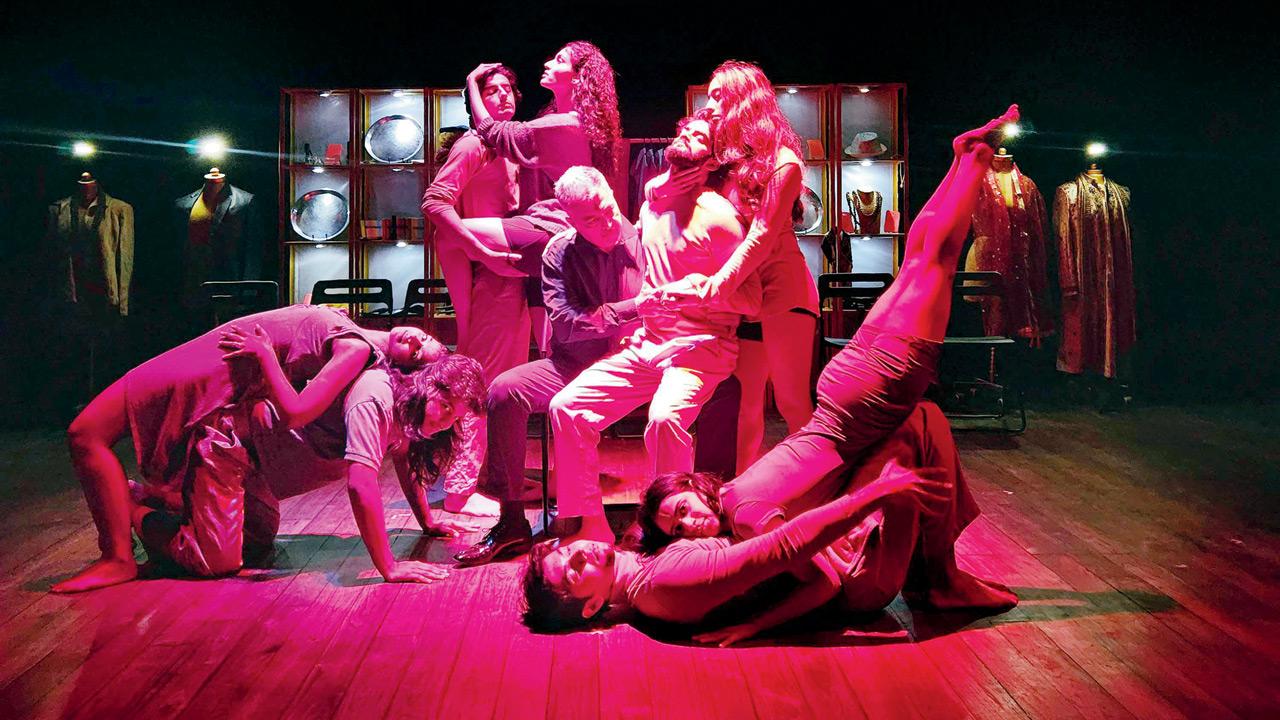
Every time someone talks about opera, flashes of Elmer Fudd chasing Bugs Bunny to the arias of Richard Wagner flash through this writer’s brain. “Even I had little idea about opera in my teenage years,” admits Frazan Adil Kotwal. The city-born baritone is in town ahead of his debut performance, From Dawn to Dream, on January 21. Presented by Avid Learning in collaboration with the Consulate General of Germany in Mumbai, Royal Opera House, Mumbai, Steinway and Sons, and Furtados, the concert marks a milestone for the singer who began his journey from this city. Accidental discovery Till 2012, Kotwal was just another student enjoying life in Mumbai. Having enrolled for his Bachelors in Mass Media and Journalism degree in Jai Hind College, his choice of music was more Bollywood than Beethoven. “I was very much part of the festival circuit. I would help out, and also participate as a singer at the festivals,” he admits. Frazan Adil Kotwal as Don Giovanni Kotwal’s interest in opera was sparked by an accidental discovery. “It was in 2012 when I attended a production at the National Centre of Performing Arts (NCPA). I had never seen anyone sing with such energy. It was my introduction to opera,” he reveals. Digital education Though he was curious, Kotwal did not know where to learn the form. “Opera is a niche art. There are few singers in India who are qualified to teach it,” he shares. Having never learnt music professionally, Kotwal turned to the internet for help. “I simply Googled ‘How to sing opera’, and started taking YouTube lessons,” he laughs. It was never easy, and often involved a lot of learning and unlearning. Evenings after college would be spent imitating performances, and voice techniques in his room. The decision might have been silly, but it reaffirmed his desire to pursue the art form. Kotwal (standing) rehearses with the orchestra before a performance Easier said than done. After several auditions, he was approved by the State University of Music and Performing Arts at Stuttgart, Germany. “Most people who pursue opera, or even a Bachelor’s degree in music in Europe, have been training for it since their early years,” the former Sewri resident admits. More than song Opera is far more than just singing. At Stuttgart, Kotwal trained in movement, waltz, singing, musicology, history of music and theory, piano, acting, and even sword fighting. “It is an acting performance on stage. You have to understand your body, its movement, and rhythm, all the while singing. Don Giovanni involves three-hours of singing, sword-fighting, acting, dancing, and eventually dying,” he laughs. Despite the challenge, it was the passion that kept him going, he shares. “They say it takes a village, and I was fortunate to have support. It is a matter of pride that young singers can watch me on stage, an Indian boy, perform Mozart’s The Count, and be inspired,” the 32-year-old admits. As he performs alongside Nadine Jo Crasto on the stage of the Royal Opera House, Kotwal will make that transition from the awed youngster to the returning prodigy. ON January 21; 7 pmAT The Royal Opera House, Charni Road East, Girgaon. LOG ON TO royaloperahouse.in (to RSVP)ENTRY FREE
17 January,2026 07:55 AM IST | Mumbai | Shriram IyengarAarey Milk Colony remains one of Mumbai’s few green zones. Eco-tour agency Naturalist Explorers will conduct an immersive evening nature walk, offering some weekend respite from urban chaos. Priyal Soni “We want to change the general perception that nature trails are best suited for mornings; they can be apt for dusk as well,” shares Priyal Soni, the platform’s chief event curator. Participants will be taken around by a naturalist, and through interactive storytelling sessions, will be introduced to Aarey’s ecology, its landscape, and its wildlife, including how it co-exists with humans and tribal communities residing there. “Currently, the season is ideal to spot fauna, ranging from Jumping and Signature Spiders to various butterflies. If lucky, participants can catch a glimpse of the Spotted Owlet,” Soni reveals. Flycatcher; (right) Ashy Drongo A birdwatcher enthusiast herself, the curator points out some interesting species to keep an eye out for: “Examples include the Ashy Drongo, the Coppersmith Barbet, and the Indian Paradise Flycatcher.” She mentions that many of these wildlife species are not exclusive to Aarey, but can be found around the Mumbai Metropolitan Region, including in Sanjay Gandhi National Park, Borivli. “We want attendees to connect with Aarey’s biodiversity and understand how it contributes to climate change regulation in its own way. Only if people fall in love with it, will they come forward to protect it and adapt to more environmentally-friendly behaviour,” Soni signs off. An expert introduces participants to different natural elements during a previous walk in Aarey Milk Colony ON January 17; 3.45 pm to 5.45 pm MEETING POINT New Zealand Hostel, Aarey Colony, Goregaon. MESSAGE 8976451433 (on WhatsApp) ENTRY Rs 450 onwards
17 January,2026 07:54 AM IST | Mumbai | Trisha GhoshIf your friends jumped off a ledge, would you do it too? For the growing parkour community in Mumbai, the answer to this age-old trick question is a resounding yes. A decade ago, you could count parkour athletes in the city on the fingers of one hand. Today Mumbaikars across the board seem to love the game of jumps, rolls, climbs and vaults. On January 11, nearly 30 of these enthusiasts took over popular South Mumbai spots to compete in Skill City, a multi-city parkour battle organised by the Mumbai Movement Academy (MMA). “The growing interest instils optimism in us for the future,” co-founder Dr Rishi Prasad had told us in conversation about the sport two years ago. A physician who picked up the sport while studying medicine in Russia, Prasad is certified by the UK-based body for coach certification, Art du Deplacement and Parkour Teaching (ADAPT). Assisted by co-founders Cyrus Khan and Krishna Mehta and a growing crew of trainers, here’s how the report card looks two years later. Ritika Mishra aces a balancing act People’s game “In 2019, the sport took off in the age group of 16 to 24 years; mostly collegians,” Prasad reveals. Today, the demographic has shifted. We learn that the age bracket of 28 to 35 years, comprising working professionals and first-time parents, has shown the most interest. The founder attributes this to the growing hunger for thrill amid the gruelling city life. At the contest last weekend, beginners and professionals performed vaults, climbed walls, and showed off flips in a scavenger hunt-style time trial. Ritika Mishra, a 33-year-old businesswoman, took to the sport months ago to get fitter, and also have fun outdoors. “I was terrified of my first jump. I didn’t think I could land it,” she admits. She’s come a long way, with a third-place win at the weekend competition. “Parkour has not only made me physically fitter, but it helps me feel confident in day-to-day movements. For instance, I’m better equipped to rebalance myself in case of a fall or a slip,” she reveals. An essential skill on the roads of this city, if we may add. Athletes climb and vault over railings as part of an exercise. Pics/Ashish Raje There’s another driving force keeping Mishra on her toes. The community faces an evident dearth of female representation at the moment. “I’d love to see more women take the leap. I can assure them, it’s not as difficult as it seems,” she adds. Let’s talk infra We’ve heard of grants for cricket grounds and basketball courts, but how do you build infrastructure for a sport that is practised in public places? The answer lies in inclusive public parks and gardens. “Most equipment in Mumbai’s public gardens today cater to either toddlers, or senior citizens [think air walkers, gym bikes]. We need more workout bars, ramps, and walls. This will help not just parkour, but sports like skateboarding and calisthenics as well,” Prasad suggests. An athlete performs a flip Some venues like the Kamala Nehru Park in Malabar Hill and the Carter Road skatepark are athletes’ favourites, but the city could do better, he believes. Inspiration lies westward, in Europe, where public park designs make considerations for adventure sports and provide safe and solid structures. The next jump While there is no official parkour regulatory body in India, the community has taken upon itself to create a buzzing cross-city collaborative schedule including annual events in Ahmedabad, Pune and Mumbai. This year, professionals are looking forward to the USA Parkour Cup in March, as well as the Parkour Earth World Championships in the Czech Republic in October. For now, the coaches are heading back to classrooms. “More than 12 schools in Mumbai have shown interest to make parkour an extracurricular activity. We’re confident this number will grow,” Prasad says. Come April, a first-ever inter-school parkour tournament will be organised for these rising stars. No such thing as ‘too cool for school’, these days. Dr Rishi Prasad and Ritika Mishra Learn the sport . Mumbai Movement Academy AT Venues across Santacruz, Juhu, Bandra, Andheri, Kemps CornerLOG ON TO @mumbaimovementacademy . Flow United School of Movement AT Maharana Pratap Circle, opposite GST Bhavan, Mazgaon. LOG ON TO @flowunited.sm Before you leap MMA’s checklist for beginners heading for their first session . Start low: Begin with ground-level exercises and build strength . Clear path: Do not climb/vault/swing into spaces if there is no convenient return path . Check your heart: Parkour is a cardio-intense discipline. Those with cardiac ailments must consult their doctors before beginning their journey . Keep clean: City spaces belong to everyone. Clean any shoe imprints, sweat marks and dust off the surfaces when you leave
17 January,2026 07:42 AM IST | Mumbai | Devashish KambleFor any daily user of the M-indicator app of the city’s suburban railway system, the chats can be a quirky, funny experience. Every once in a while, a message by a friendly commuter warning another about the location of a Ticket Collector on a certain station, will pop up. This is the ‘invisible network’ that artist Ranjit Kandalgaonkar refers to when addressing the functioning of the city. Having lived in Mumbai all of his life, Kandalgaonkar began documenting these little observations of the city’s unspoken rules and the people living within those invisible lines. These find their way into his latest exhibition, cityinflux that opened for the Mumbai Gallery Weekend, earlier this month. Ranjit Kandalgaonkar “cityinflux is an endeavour to document the in-between spaces that appear as an aberrant to the norm, but in fact get legitimised due to the inability of the surroundings to linearise lost but recognisable markers defining the city fabric,” Kandalgaonkar writes. City as muse “It began as daily observations; made when going about your general work. I was interested in civic infrastructure as well as the local trains. When you engage with something over a long period of time, it keeps accruing. You begin to spot anything that aligns, or seems off, or peculiar,” he shares later, over a phone call. Hygiene. Pics Courtesy/Ranjit Kandalgaonkar; Fulcrum Tracked over a timeline of two decades, these aberrations begin to offer an insight into the subliminal structure that holds up the city, and its people. Take, for instance, the walls along railway stations, he observes. “To me, they are a parallel city running along the railway lines. It is not given importance, or even thought of as a true representation. Yet, floating populations, informal labour, gather to these walls,” the artist notes. Between the lines A view of the artwork, rush hour, depicting the crowded local train experience in the city One work, Hygiene, captures the visuals of a boundary wall alongside Borivli railway station — Kandalgaonkar’s regular commute portal. “Over the years, I started observing a number of things like the barbers, or the trees that grow into them. It becomes a sign of the city’s change over the timeline,” he says. Or the piece, rush hour, an instantly recognisable emotion of the mass of people at a railway station turning into a conscious organism as they make their way into the arriving local train. The image of Raatraani is a momentous capture of an autorickshawwallah through the reflection of his rear view mirror. Raatraani and Hsg.Soc.Pvt.Ltd “The cover image is a man jumping between local trains. It was taken at Borivli station’s Foot Over Bridge (FOB). People do that often, as have I, at times. The identity of the city is revealed at this moment. These are the invisible networks that we align our lives around,” Kandalgaonkar observes. These observations first found their way to the website, cityinflux.in, created in early 2009. Still functioning, it carries a tactile rawness that is different from the flashy modern-day portals. Gallerist Ayesha Agarwal adds, “We have seen so much change in the city over the last 20 years, and that is where Kandalgaonkar’s work becomes an important body of work that speaks to the changing and developing city.” With a follow-up exhibition coming up at the gallery in March, it looks like the city’s unspoken secrets are going to find their way to Kala Ghoda. TILL February 14; 11 am to 7 pm AT Fulcrum, 116/23, Great Western Buildings, Chamber of Commerce Street, Kala Ghoda
16 January,2026 09:24 AM IST | Mumbai | Shriram IyengarManifest your way Pic courtesy/happywagon.com This 2026 DIY vision board kit offers over 130 photos to visualise a set of goals, think about your intentions, and design a custom board that reflects yourself authentically, be it for health, confidence, or personal desires. Check out the accompanying Spotify card to help you craft an exclusive playlist of songs.Log on to happywagon.com Cost Rs 1499 Find momentum Pic courtesy/@anupamsuperstore This popular stationery store offers a smart annual planner to help you track daily tasks, goals, and habits in a fun and simple format.At Anupam Stationery Superstore, Mhatre Wadi, Borivli West.Time 9.30 am to 9.30 pm Cost Rs 950 For the tech-savvy Pic courtesy/etsy.com Yearly planners don’t have to be handwritten. Carve out your intentions with a digital vision board kit with Canva templates, which offers 200 curated ‘dream life’ images, with instructions on how to download and use, to create your unique theme and aesthetic.Log on to etsy.com Cost Rs 719 One for the girls Pic courtesy/amazon.in You might want to check out this vision board kit, which ticks all the right boxes, from images, elements, and affirmative quotes, to tips on your career, love, fitness, travel or finance goals, and importantly, self-love. Personalise the board with blank notes, and pin the sheet on your room walls, or include them in journals to creatively plan your pursuits.Log on to Funk You Store on amazon.inCost Rs 399 Peacefully professional Pic courtesy/thepikoshop.com No fuss needed with this two-planner bundle from a Mumbai-based stationery brand, which guides users (especially students, entrepreneurs, and professionals) to prioritise clarity, routine, and calm productivity. Offering a flexible start and pause options, the clean, minimal layout will help you focus.Log on to thepikoshop.com Cost Rs 1599 Aim for goodness Pic courtesy/thejuneshop.com Bring something new to your year with this limited-edition undated planner for ‘good intentions’. Aimed for those focusing on mental well-being and productivity, this colourfully illustrated monthly divider is designed with routine suggestions, habit, health, and period trackers, and a colouring spread, amongst others. Log on to thejuneshop.com Cost Rs 2199 Visualise with colours Pic courtesy/brownliving.in This vision board kit in bold sunset shades includes a guided journal, and three picture booklets with images drawing from different categories — spirituality and health, relationships and lifestyle, and passion and career. You cannot go wrong with their useful motivational stickers and spirited quotes.Log on to brownliving.in Cost Rs 2640 Simply straightforward Pic courtesy/ doodlecollection.com Goals don’t need to be complicated and layered. Keep things simple with this dateless productivity planner to help you stay organised and focused on your intentions. It includes activity prompts to prioritise tasks, monthly planners for effective goal setting, and additions, from a pocket-sized meal planner to printed motivational quote pin-up cards.Log on to doodlecollection.com Cost Rs 498 No more worries Pic courtesy/inkarto.com If you identify with the famous Walt Disney hit song Hakuna Matata, don’t miss this All-in-One yearly planner. Apart from the quote and cheerful art, it has vibrant stickers, ‘Season of My Life’ and vision board options, and an interesting ‘No Negative Self-Talk’ challenge. Log on to inkarto.com Cost Rs 1299
16 January,2026 09:18 AM IST | Mumbai | Trisha GhoshComedy is not an easy business. Ask Daizy Maan. For the last two weeks, the Melbourne-based writer-comedian has been travelling across the length of the country. “It has been great. We opened in Mumbai, and it was my first-time doing comedy in the city. It was quite fun discovering the jokes that land, and why they work,” she admits. Maan has been to India before though. Born and raised in Melbourne, amidst a conservative Punjabi family, the journey to become a comedian forms the basis of her show, Brown Women Comedy. With the final leg in Mumbai wrapping up with a show in Khar on January 16, the producer talks us through her journey. Comedy was not high on the 31-year old’s plans. “I did not start taking comedy seriously till about five years ago. Even then, the first two years were spent producing shows,” she admits. But living in Melbourne, the art was an inevitable part of her experience with the Melbourne International Comedy Festival. Kru Harale, Supriya Joshi and Devanshi Shah It was during one of these festival runs in 2022 that Maan realised the absence of diaspora representation at the festival despite Indians being a large minority in Australia. “I went around attending gigs. We realised there were only three Indian women performing solo shows, as shown by a research made by Australian South Asian Centre on the lack of ethnic diversity on stage. It made me wonder if there were others of my ilk,” she laughs. That laid the foundations for the set, Brown Women Comedy. A pind in Melbourne The ‘Brown’ in the title was an identifier beyond skin tone. “I grew up in a very Punjabi home in Melbourne. My parents migrated to Australia in the 1990s, but culturally it felt like growing up in a pind [village] in Ludhiana,” the comedienne recalls. Despite her humour, Maan did not grow up idolising comedians. As the Boroondara Young Citizen of the Year in 2015, a delegate for Australia India Youth Dialogue, one would think Maan was the ideal child. “Comedy was never an obvious aspiration. The huour comes from that gap, from explaining one world to another,” she says. Finding rebels As producer, Maan used this idea to apply for funding to the Centre for Australia India Relations (CAIR), that enabled them to bring the show to stage. The show is now supported by the Australian Consulate in India, and Kommune. On Friday, the Australia-based duo of Maan and Kru Harale will join the Indian talents of Supriya Joshi and Devanshi Shah. “We first began in April at the Melbourne International Comedy Festival, with a set featuring Niv Prakasam and Ramya Ramapriya. The audience loved the show back home,” Maan shares. The sight of women cackling to jokes that were taboo in most Asian-Australian households only affirmed her decision to take it on tour. “I was a little hesitant about the title Brown Women Comedy in India. But then, our comedy was never about colour, but about perspective; something in contrast to the mainstream.” she says. Yet, there is a common thread that ties the squad. “You have to look at what it means to be a woman in India. Female comedians here thrive on picking up taboo subjects, and use humour to address them,” she points out. The perfect riposte, she concludes. One has to concur. ON January 16; 8 pmAT The Habitat, 1st floor, Hotel Unicontinental, Khar West.LOG ON TO in.bookmyshow.comCOST Rs 599 onwards
15 January,2026 09:54 AM IST | Mumbai | Shriram IyengarThursdayRaw truths on stage Catch this quirky, darkly humorous musical satire, The Greatest Show on Earth. The story of a media professional involving herself in a suicide attempt uses movement, and choral speaking and song to condemn a rigid capitalist system.Time 8 pm onwardsAt Prithvi Theatre, Janki Kutir, Juhu. Log on to in.bookmyshow.comEntry Rs 710 FridayA mindful meal Pic Courtesy/The Silver Train Experience a Royal Harvest Thali for Makar Sankranti, uniting Maratha, Rajput, and Punjabi palace philosophies, amongst others, at one table.Time 12 pm to 11.30 pm At The Silver Train, Phoenix Palladium, Lower Parel. Log on to @thesilvertrainrestaurant.Cost Rs 1500 onwards (vegetarian); Rs 1750 onwards (non-vegetarian) SaturdayHunting through Bandra Pic Courtesy/Harsh Nil Join an immersive treasure hunt along the streets, hosted by Instagram community Lost Childhood Found, complete with clues, riddles, and the thrill of teamwork with new people. Time 4 pm onwardsAt Bandra (exact location shared post registration)Log on to @lostchildhoodfoundEntry Rs 333 per person (till January 16); Rs 369 per person (on January 17, till noon) Softness speaks out Pic Courtesy/Instagram Take some time out for an intimate, solo poetry evening, The Soft Girl Speaks Up, led by city-based performance poet and storyteller, Dhruvi Shah (right), who will share personal, honest stories.Time 6 pm to 7 pmAt Kitaabghar Reading Room & Bookshop, Veera Desai Road, Andheri West. Log on to @dhruvithewriter (to register)Entry Pay as you like SundayMedley of genres Pic Courtesy/ @mousumidatta_music Enjoy a fusion of melodies at this performance by singer Mousumi Datta (left), in a contemporary jazz show infused with Indian Classical music, funk, and traditional Bengali tunes. Time 10 am to 12 pm AT The Nest, Simla Nagar, Malabar Hill. Log on to allevents.in/mumbai Entry Rs 550 onwards Get your hands dirty Pic Courtesy/Roots Nature Club This immersive hands-on workshop by Roots Nature Club will introduce your children (ages 7-13) to the environment, using outdoor learning methods to teach much-needed observation skills. Time 7.30 am to 9.30 amAt Sanjay Gandhi National Park, Borivli East. Call 9820613334Entry Rs 3800 (plus GST) Meet Mumbai’s shore treasures Pics Courtesy/Wildnest Don’t miss this intertidal shore walk by wildlife and travel platform Wildnest, showcasing the range of marine biodiversity lying hidden in the city. Expect to spot crabs, sea sponges, or even a Dwarf Coral Star (inset).Time 4 pm (Carter Road); 3.45 pm (Juhu Koliwada shore)At Carter Road, Bandra; Juhu Koliwada shoreCall 9967056674 (to register)Entry Rs 700 (adults); Rs 500 (children, ages 4-10)
15 January,2026 09:43 AM IST | Mumbai | Trisha GhoshMain chalta phirta Bombay hoon” [I’m a walking Bombay, on the move] — Saadat Hasan Manto’s famously quoted line sowed a few questions in our mind: Where exactly did one of the greatest writers of his time walk, have they changed nearly eight decades after he left his ‘second home’ for Lahore, and do they still reflect glimpses of his legacy? Zubair Azmi, director of Urdu Markaz and founder of the Bhendi Bazaar Research Academy, gives us a handy guide to Manto’s Bombay. Zubair Azmi 1 Arab Galli In 1936, a young Manto in his early 20s made his way to Bombay and settled for a compact room in the chawls of Arab Galli. Saadat Hasan Manto. PIC COURTESY/WIKIMEDIA COMMONS Here, he saw the intimidating, feared gangster Mammad Bhai, who is later comically revealed to be a bubbly benevolent man in Manto’s eponymous story, Mammad Bhai. Manto writes about paying nine rupees and eight annas per month for the residence. Renting a home in the evolving neighbourhood will set you back to the tune of Rs 40,000 a month in 2026. 2 Adelphi Chambers The writer’s more recognised abode on Mirza Ghalib Road (formerly Clare Road) in Byculla was a more modern, cosmopolitan locality. It is also where Bollywood greats like Ashok Kumar and Nargis visited the writer. It is said that K Asif, director of the iconic Mughal-e-Azam, also came visiting once. 3 Nagpada Garden On breezy evenings, Manto would often walk down to the Nagpada Garden to wind down, and as always, observe the people around him. The garden is now the Padmakar Tukaram Mane Garden, known for its wall mural sculpture of poet Mirza Ghalib on its façade. 4 Imperial Film Company The poster of Kisan Kanya (1937) produced by Ardeshir Irani For a brief period, Manto worked with filmmaker Ardeshir Irani who founded the Imperial Film Company (now Jyoti Studio) near Grant Road railway station. The first film scripted by Manto, Kisan Kanya, was shot in the same studio. Cinephiles will know Irani and the studio for producing India’s first sound film, Alam Ara (1931). 5 Nagpada Junction Nagpada Junction with Sarvi in view Right outside Nagpada Police Station, Manto once observed a pimp, Siraj, leaning on an electricity pole in search of his next client. Kebabs at Sarvi. FILE PIC In his extensive writings on the complex lives of prostitutes and pimps, the writer makes references to Siraj. Not far away, Manto’s go-to for his evening chai, Sarvi, remembers him with the ‘Manto Table’ to this day. 6 Minerva Movietone Zubair Azmi suggests you make a detour to the lanes of Sewri, where Manto worked with Sohrab Modi’s Minerva Movietone studio. Azmi’s grandfather-in-law Sadat Ali, who was the chief production manager would recall how the writer often accompanied him home, and excitedly requested, “Mia, kuch khilaiye.” The site of Minerva Movietone is now barren land. Meet the bhais Watch Mammad Bhai’s story unfold onstage at actor Amit Tiwari Anand’s eponymous solo play. The FTII alumnus will don multiple hats to recreate the residents of Arab Galli on the erstwhile South Bombay stage. ON January 18; 5.30 pm AT National Gallery of Modern Art, Fort. LOG ON TO @amittiwarianand ENTRY Registration mandatory
15 January,2026 09:37 AM IST | Mumbai | Devashish KambleSweet beginnings Gul Poli is a sweet flatbread. Pic courtesy/Wikimedia Commons Gul Poli is a sweet flatbread, which we traditionally serve during Maharashtrian Makar Sankranti celebrations. The core ingredients are jaggery and sesame seeds. Take 500 gms of ordinary jaggery, one cup of sesame seeds, a quarter cup of khus khus (poppy seeds), a quarter cup of grated dry coconut, and a quarter cup of besan (gram flour). Dry roast the seeds and coconut, mainly on pulse mode otherwise sesame seeds release oil. Roast the gram flour in oil till it changes colour. Finely grate the jaggery. Finally, mix all the ingredients together on pulse mode. There should be no lumps in the mixture. Meanwhile, knead wheat flour with ghee and salt and make a soft dough for the flatbread. Roll two small puris. Place the thick stuffing in between two puris and roll it like a paratha. Roast on a pan on low flame with ghee. Madhavi Chavan, homemaker, Andheri Peas and joy Lilva Kachori is a Gujarati snack. Pics courtesy/WIKIMEDIA COMMONS During Uttarayan, we generally prepare Undhiyu, served with fried puris and often Shrikhand. Savoury snacks include Lilva Kachori (Green Pigeon Pea Dumplings), a classic Gujarati winter delicacy. Crisp, fragrant, and mildly sweet-spiced, it is served with green and sweet tamarind chutneys and hot Masala Chai. Undhiyu is often served with Puri during traditional Gujarati Uttarayan festivities Combine flour and salt in ghee or oil until the mixture resembles breadcrumbs. Gradually add water and knead into a firm, smooth dough. Prepare the filling by coarsely grinding the lilva (pigeon pea) into a grainy mixture without water. Heat some oil, add cumin seeds, and eventually, asafoetida, green chillies, and ginger; sauté briefly until aromatic. Then, add the ground lilva, with turmeric and coriander powder, and salt. Cook on medium heat, stirring continuously until the mixture turns dry and aromatic. Add sugar, remove from the heat; stir in garam masala, lemon juice, and fresh coriander. Allow the filling to cool. Lastly, shape the kachoris: Divide the dough into lemon-sized balls. Place the lilva filling inside and fry until they’re golden brown and crisp on all sides. Rupa Shah, homemaker, Dahisar Kheer, Punjabi-style Roh Di Kheer is eaten the next day. Pics courtesy/Amrita Kaur In the last few years, I’ve discovered the traditional Punjabi dessert, Roh Di Kheer — rice cooked in sugarcane juice. It’s made often for Lohri celebrations, kept overnight under the winter sky, and consumed the day after; the sugarcane ensures it doesn’t ferment much. As someone who loves learning the history of festival traditions, I’ve been making this dessert for quite a few years now. For a small portion, boil a litre of sugarcane juice, skimming out any foam surfacing. Once reduced to three-quarters of the quantity, add two tablespoons of soaked rice — I prefer short grain rice, but traditionally broken rice is used — along with a green cardamom. Let it simmer, stirring occasionally until the rice is well-cooked and has soaked up all the juice. Add two to three tablespoons of milk and chopped dry fruits, cook for another seven minutes, and it’s ready. Amrita Kaur, holistic gourmet chef and digital wellness content creator, Dharamsala (previously, Mumbai) Offering to the Sun God A woman cooks Sakkarai Pongal in the outdoors in Dharavi. Pics courtesy/Pooja Ashokkumar; Dinesh Devraj For Tamilian families in Mumbai and across the diaspora, Pongal begins with women making kolams in their homes and verandas, using rice paste. Soon after, the traditional pongal dish (Sakkarai Pongal) is prepared outdoors using the season’s first produce, entailing rice and lentils, cooked until it boils and spills over, which is an auspicious moment marking abundance of good things. This is followed by an elaborate vegetarian meal, consisting of the traditional use of 21 varieties of vegetables. Some households prepare them into a single coconut-based avial dish, while others make separate dishes with these vegetables, all of it always accompanied by sambar and rasam. Pooja Ashokkumar, historian and researcher, Goregaon Sakkarai Pongal Sakkarai Pongal. Pic courtesy/Wikimedia Commons Ingredients>> 1 cup raw rice>> 1/4 cup moong dal>> 1 to 11/4 cups jaggery (powdered)>> 3–4 cups water >> 3 tbsp ghee >> 10–12 cashew nuts >> 1 tbsp raisins >> ½ tsp cardamom powder >> A pinch of salt Dinesh Devraj MethodLightly roast the moong dal and wash it with rice; cook both with water until soft. Melt the jaggery with a little water, strain, and add it to the cooked rice-dal mixture. Simmer on a low flame, stirring continuously until thick. Add cardamom powder, and a pinch of edible camphor (optional) and salt. Fry the cashews and raisins in ghee and mix these into the pongal. Serve the dish hot after offering it to the Sun God. Information courtesy: Dinesh Devraj
14 January,2026 08:34 AM IST | Mumbai | Trisha Ghosh | Rumani GabhareAs Bridgerton readies for a comeback with Season 4, Gen Zers and young millennials might find themselves dialling back to classic silhouettes and styles inspired by the women on the popular OTT period drama. “There is a growing fascination with vintage femininity, think flowing fabrics, corset detailings, floral embroidery, and lace that feels nostalgic yet modern,” says stylist Shikha Bhansali. Shikha Bhansali These elements are no longer reserved for special occasions, but are now being styled into everyday outfits with an effortless contemporary twist. The pastel blue, delicate floral details worn by Daphne Bridgerton in Season One instantly added softness to her look. Sleeve it up Puffy and chunky sleeves, iconic in the 1890s, and in the 1980s, seem to be making some sort of a comeback in 2026. The leg-of-mutton sleeve, also known as the gigot sleeve, has been reimagined through puffy jackets, dramatic blouses, and chunky layers. An example of this look is Cressida Cowper’s outfits, which were greatly nuanced in season three. The lacework on the gowns and puffy sleeves add a feminine touch Her dresses were simple with lace and basic detailing, but her sleeves were dramatically oversized, adding character to each look. “Today’s girls love mixing minimalism, usually pairing clean silhouettes with one statement piece like Francesca Bridgerton did in Season Three,” Bhansali emphasises. A dramatic sleeve or oversized jacket adds personality, or the much-desired ‘oomph factor’ to any outfit. Lace and corsets team-up Corsets and lace are at the heart of this romantic fashion revival, inspired by the timeless elegance of the Bridgerton era. “Corsets, once seen only in gowns and period outfits, are now being styled in modern ways — layered over crisp shirts, soft dresses, and even casual pieces to create a look that moves easily from day to night. Girls are styling them even for desi wedding looks,” Bhansali mentions. They add shape, confidence, and a touch of drama while still feeling classy and feminine. The stylist likes to add a corset over her shirts, as the look transforms seamlessly from desk to dinner. Anthony, Colin, and Benedict Bridgerton wear floral and embroidered jackets Lace, too, has become more wearable, with lace skirts paired with oversized T-shirts or sweatshirts, and lace dresses styled over trousers. This mix of delicate and bold creates a beautiful balance, making these vintage-inspired pieces feel fresh, relaxed, and perfect for today’s style. Floral designs for him Men are also embracing romantic detailing, Bhansali reveals. “I love styling men in embroidered jackets or blazers with delicate floral details — it adds the right amount of depth and softness to the look,” says Bhansali. Floral scarves and waistcoats, as seen on Anthony and Benedict Bridgerton, bring drama while complementing solid blazers. Lace pocket squares or ties add playful texture, while dainty brooches and rings complete the look with understated elegance. Complete the look Hyacinth in a dewy make-up appearance Make-up>> Dewy, glossy skin is back, giving that fresh, “glow-from-within” look seen throughout Bridgerton>> The focus is on hydrated, radiant skin rather than heavy or matte finishes>> Soft, natural glam with luminous highlights is set to dominate the coming season Footwear>> Ballet flats and Mary Janes are trending big with Gen Z and young millennials>> Bejewelled, metallic, studded and embellished shoes are especially popular
14 January,2026 08:33 AM IST | Mumbai | Rumani GabhareNobody is born with hate or apathy towards animals in their heart. Children learn it from those around them,” says animal activist Akshay Ridlan. Is it possible, then, to act quicker and teach them compassion at the right time? France seems to have taken a timely step in the direction, by making pet care and animal welfare mandatory topics in school curriculum. While no major education board in India mandates such lessons, a handful of schools are going the extra mile. Ridlan is gearing to address 600 students of the Guru Nanak Higher Secondary School and Junior College in Sion’s GTB Nagar on Friday. “Children are subjected to immense stress at a very young age in today’s competitive world. This paves the way for emotions like frustration, hate, and indifference to seep in as they grow up,” Ridlan reveals. Begin with sensitivity At the session, the Sion resident will present a 20-point presentation on how to be a better companion to the city’s strays. It includes a practical guide on how to treat an injured animal, the dos and don’ts of handling strays, and the case for adoption against shopping. At the heart of it is emotion, Ridlan says. Can it be taught? “No doubt. You could introduce animals as friends that need a helping hand to survive in the city. Unfortunately, many parents do the opposite, and portray animals as intruders,” he says. Pradnya Hattiangadi. PICS COURTESY/PRADNYA HATTIANGADI, Pawfriend, Akshay Ridlan Madhavi Naik, principal of the Higher Secondary School, seconds Ridlan. “Although such sessions are conducted only once or twice a year, we’ve seen visible change. Recently, a stray dog entered our campus, and all our students and staff joined hands to provide care, find a rescuer, and eventually hand over the animal,” she recalls. Naik believes that while children learn about animals in textbooks every year, they’re seldom taught about co-existing with them. Right place, right time City-based dog trainer Pradnya Hattiangadi has been making similar annual visits to schools in and around Mumbai. She stresses on the importance of finding the right animal in cases of hands-on sessions. “Our dogs are specially trained to remain calm, and not make sudden movements that might scare children. This allows us to teach children how to approach a dog, build trust, and interact safely with animals,” she says. Akshay Ridlan However, the world outside might not be only harmless trained pets. “While defending yourself against an aggressive stray is a skill we teach older students, the younger pre-schoolers need a slightly cheerier approach. The first introduction to an animal can influence how students feel about animals as they grow up,” the trainer points out, adding that she would love to see children as young as five being taught about animal care. Textbook solution The experts agree that changing the Indian school curriculum is a Herculean task, involving appeals, letters and long waiting periods. In the meantime, they urge Mumbai schools and colleges to turn to local NGOs, rescue groups, and shelters to collaborate on extracurricular lectures and sessions. “I still get calls from students reporting or requesting rescues. “Sometimes I forget I ever spoke to a certain student, but they always remember every little lesson,” he signs off. Log on to: pawfriend.in and @akshay_riddlan on Instagram (Akshay Ridlan); @prady58 on Instagram (Pradnya Hattiangadi) Lessons from France The newly introduced daily lessons in the school curriculum in France will focus on key skills including £Feeding£Hygiene£Emotional wellbeing£Safe interactions£Empathy
14 January,2026 08:33 AM IST | Mumbai | Devashish KambleADVERTISEMENT