













After SC criticism over state govt’s compensatory afforestation, environmentalists want audit into tree plantation drives
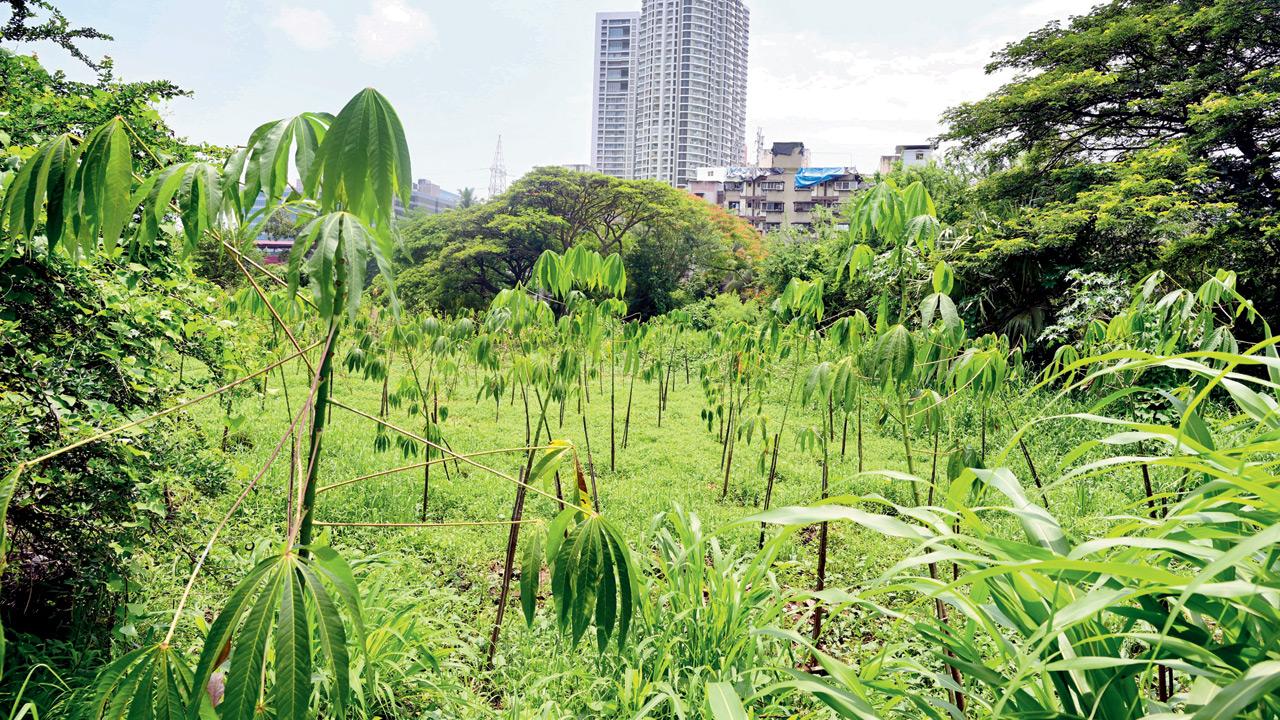
A plot in Aarey from where trees were transplanted. FILE PIC/NIMESH DAVE
While the Supreme Court on Monday criticised the Maharashtra government over poor compensatory afforestation undertaken for trees cut in Aarey forest to make way for infrastructure projects after an inspection found that only about 50 per cent of the over 20,000 planted saplings had survived, city-based environmentalists and nature lovers have called for stricter monitoring. mid-day has been consistently highlighting how compensatory plantation and transplantation efforts have left much to be desired.
On Monday, the court criticised the Maharashtra government regarding the poor afforestation. It has been reported that the court also instructed the state chief secretary to submit concrete proposals by November 10 for the management and protection of trees planted under the compensatory afforestation mandate. The court was also hearing a plea seeking permission to cut trees for the construction of the Goregaon-Mulund Link Road (GMLR) project, which aims to connect Film City in Goregaon with Khindipada (Amar Nagar) in Mulund.
Background
Only about half of the trees planted by the Mumbai Metro Rail Corporation Ltd (MMRCL) inside Sanjay Gandhi National Park (SGNP) as part of its compensatory afforestation programme have survived, according to a compliance affidavit filed by the Maharashtra government before the Supreme Court. The affidavit submitted in the ongoing suo motu case on tree felling in Aarey forest includes reports from both the SGNP forest department and IIT Bombay, assessing MMRCL’s ecological commitments linked to the Aarey Metro car project and related tunnelling works.
A report dated October 15, 2025, by Kiran Patil, deputy director (south), SGNP, stated that out of 20,460 saplings planted under MMRCL’s compensatory afforestation and corporate social responsibility schemes between 2018 and 2019, only about 10,230 (50 per cent) have survived. The plantations, located in the Malad Round of Krushnagiri Upvan (KUB) Range, were meant to offset trees felled for setting up Metro infrastructure.
The inspection conducted in September 2025 found stunted and irregular plant growth, with several patches affected by poor soil depth, water scarcity, and damaged fencing. The report also noted that irrigation pipelines were largely defunct, leaving most sites without proper watering systems.
At one location, Ramgad, officials found no visible plantation, despite its inclusion in official plantation records. To ensure the long-term survival of existing saplings, the forest department has recommended a three-year extension of MMRCL’s plantation maintenance contract. “Adequate protection and regular monitoring are needed to achieve ecological restoration goals,” the report noted.
Land handed over
As part of ongoing environmental obligations, the forest department has also handed over 15 hectares of forest land in South Magathane Beat, KUB Range, to MMRCL for new afforestation activities. The handover took place on September 22, 2025, following directions from the SGNP authorities. The findings underline the challenges of maintaining large-scale compensatory plantations in urban forest areas and will form part of the State’s next compliance submission to the Supreme Court, which is expected to review the matter in the coming weeks.
Emphatic activists speak
Environmentalist Stalin D said, “Greenwashing by MMRCL has been exposed in the Supreme Court. Tall claims of planting 21,000 saplings 15 feet in height were made on camera by the state government and MMRCL. The truth, which people must realise, is that transplantation and compensatory afforestation is not easy and has high failure rates. Full-grown trees lost are almost a permanent loss. Fudging data and fooling people must stop. The cost of maintaining saplings for seven years is exorbitant and needs dedicated resources. This is never done, and to date, all projects have failed to show that their compensatory plantations have survived.”
Wildlife Conservationist Kedar Gore from The Corbett Foundation, said, “It is unfortunate and shameful that the Maharashtra government could not ensure the survival of the 20,000 saplings planted as compensatory afforestation by MMRCL for the trees cut in Aarey forest. There is no rocket science in this, and with proper care and maintenance, this could have been achieved with a success rate of at least 85 per cent. This shows the callous attitude of the agencies and officials concerned.
If we have failed to successfully nurture these 20,000 saplings, how on earth should one believe the tall claims being made to replant and regrow lakhs of trees in lieu of ecologically destructive mega projects such as the Gargai dam in Tansa Wildlife Sanctuary? An independent and impartial audit should be undertaken for all the tree plantation programmes implemented by the Maharashtra government in the past decade, and a critical report published on their success. Hundreds of crores in taxpayers’ money have been invested, and we, the people, have every right to know the status of such mass plantation drives.”
 Subscribe today by clicking the link and stay updated with the latest news!" Click here!


